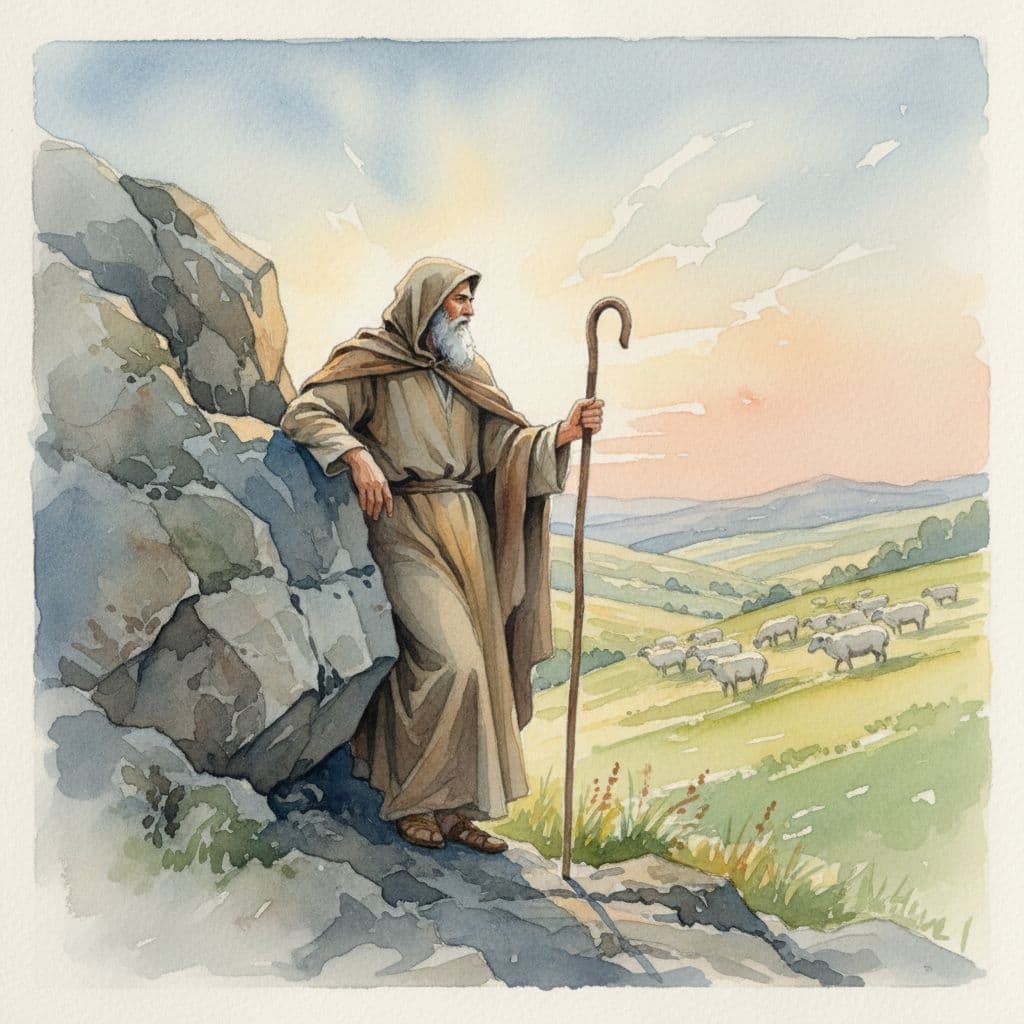
Moses and the Rock: Teaching Self-Control When Kids Feel Pushed
Table of Contents
What happened at the rock, and why the Bible tells both stories
How you can help children see what self-control looks like in real life
Simple ways to turn this Bible lesson into a calmer home
What you want your child to remember long after the story ends
You know the moment. The whining is almost deafening, siblings are snapping at each other, and one more rude answer makes the whole room feel tight.
When that happens, you're not only dealing with behaviour, you're helping your child learn self-control when emotions get loud.
The story of Moses and the rock is so helpful here. It shows God's patience, human pressure, and what can happen when someone speaks before stopping.
What happened at the rock, and why the Bible tells both stories
There are two rock stories, not one, and that matters.
In both moments, the people were thirsty. In both moments, they complained. In both moments, Moses was carrying the weight of a grumbling crowd.
But the outcome was not the same, because Moses did not respond the same way.
The first time God provided water, even after the people complained
In Exodus 17:1-7, the Israelites were in the wilderness without water. They argued with Moses and questioned whether God was with them at all. It was ugly. They were scared, thirsty, and loud about it.
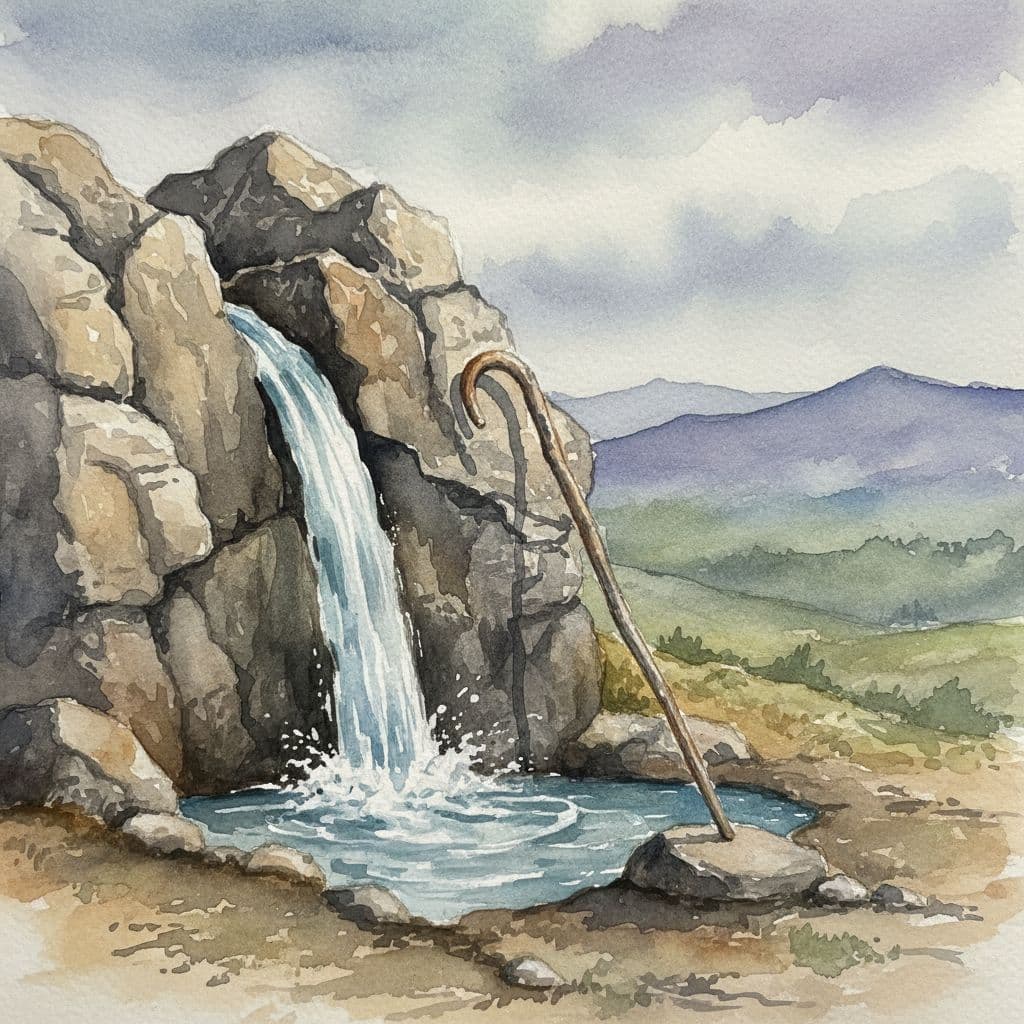
Moses cried out to God because the pressure was intense. God told him to take his staff, go to the rock, and strike it. Moses obeyed. Water came out, and the people drank.
That first story shows something children need to hear often: God is faithful, even when people are upset. The people's complaining was wrong, but God's care did not run dry. He still provided what they needed.
That can help your child see a simple truth. Big feelings do not surprise God. Need does not give you permission to have a melt down, but it does mean you can bring your need to Him.
You can't scare God with big emotions.
The second time Moses got angry and spoke before thinking
Numbers 20:1-13 sounds familiar at first. Again, there was no water. Again, the people complained. Again, Moses and Aaron went before the Lord.
This time, God told Moses to speak to the rock before the people. But Moses was angry. He gathered the people and said, "Listen, you rebels, must we bring you water out of this rock?" Then he struck the rock twice with his staff.
Water still came out. God still cared for the people. But Moses had not honoured God in the way God commanded. He let anger lead the moment. His words were harsh. His actions were not obedient.
That part matters for your children. Even a faithful leader can make a serious mistake when he feels pushed too far. Pressure doesn't create holiness. It often reveals what is going on inside.
What Psalm 106 teaches about losing patience
Psalm 106:32-33 gives a short, honest comment on what happened. It says the people made Moses angry, and he spoke rashly.
That little line explains a lot. Moses was provoked. He was worn down. He was facing more complaining. And in that heated moment, his mouth ran ahead of wisdom.
Feeling pushed explains a reaction, but it doesn't excuse it.
That honesty is one reason this lesson works so well with children.
The Bible does not hide messy moments. It tells the truth about godly people who still needed self-control. Your child doesn't need pretend heroes.
Your child needs to see that even strong believers can fail, and God still teaches them.
How you can help children see what self-control looks like in real life
This story becomes practical fast when you bring it into your home. Think sibling fights, stomping off, yelling across the room, or that sharp tone that lands like a slap.
Children know what it feels like to be annoyed, misunderstood, or tired.
What they usually don't know is what to do next.
Self-control is not pretending you feel fine. It is not stuffing emotion down until it pops out later. It is learning that feelings are real, but they are not the boss.
Teach that feelings are real, but they do not have to be in charge
Your child may feel angry because a toy was grabbed. Your child may feel frustrated because a sibling won't stop humming in the car. Those feelings are real. You don't need to scold a feeling.
What needs guidance is the choice that follows.
You can say, "You can feel mad and still keep your hands to yourself." Or, "You can feel upset and still choose calm words." That's simple, clear, and easy for a child to hold onto.
Sometimes children think self-control means never feeling strong emotions. It doesn't. A better picture is this: feelings are like passengers in the car, but they don't get to drive.
God helps you slow down, tell the truth, and choose what is right.
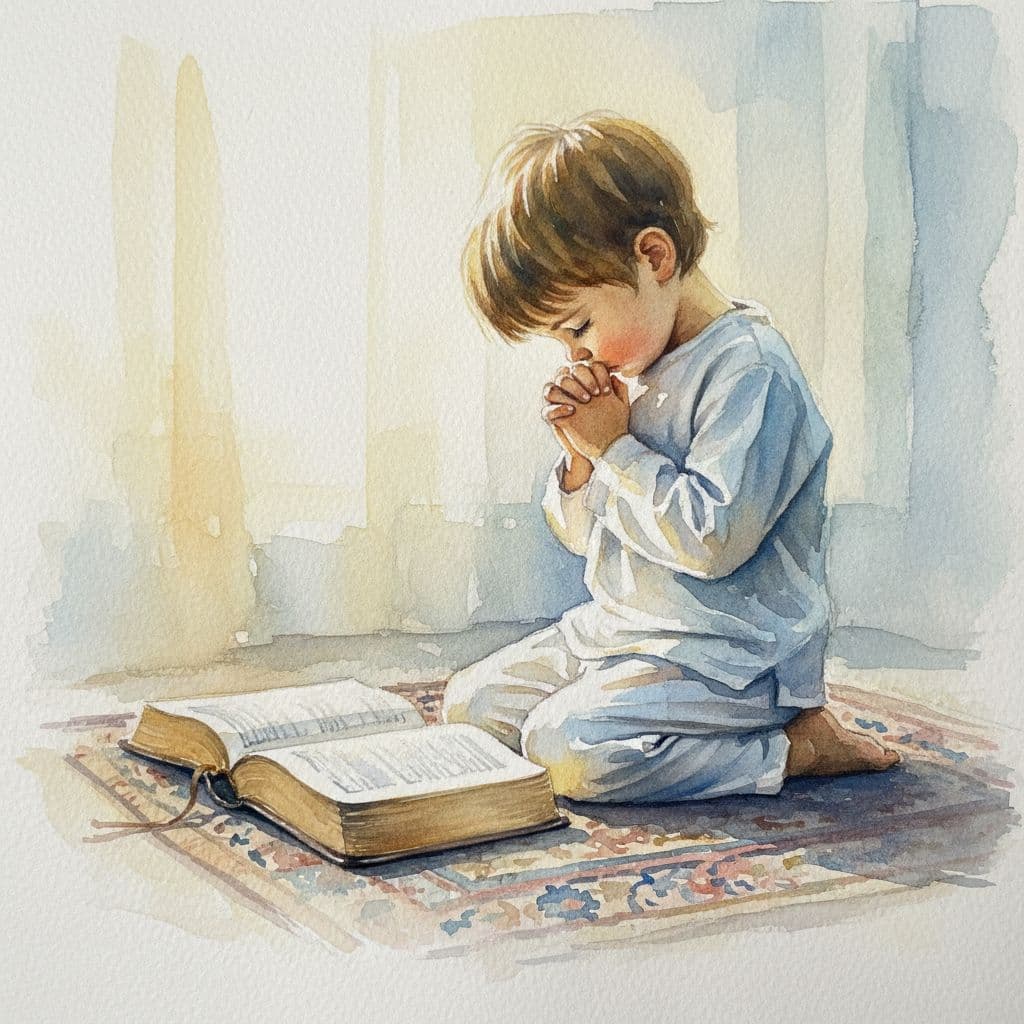
A small pause can change the whole moment. Your child may want to yell, but can breathe first. Your child may want to slam a door, but can stop and ask for help.
Show children that words matter when they are upset
Moses' problem was not only what he did. It was also what he said. Psalm 106 points right at his rash words.
That gives you a clear bridge to everyday parenting. When your child says, "I hate you," "It's all your fault," or "You're so mean," those words matter. So does muttering, mocking, blaming, and shouting across the room.
You can explain this without condemning. Say, "When Moses was angry, his words came out wrong. That happens to us too. We need God's help before we speak."
Children often focus on physical actions because those bring consequences faster. Yet many family wounds start with words.
Self-control includes mouths, tone, and timing. Not every true feeling needs to be said the first second it appears.
Point out that obedience still matters when everyone feels stressed
One of the clearest lessons in Numbers 20 is this: stress did not cancel God's instruction. Moses was still called to obey.
That lands in family life more than you might think. Your child may be tired, embarrassed, hungry, or overstimulated. Those things matter. You can care about them. But they do not erase what is right.
You can say, "I know you're upset. You still may not hit." Or, "I know this is hard. You still need to answer respectfully."
That kind of correction is firm, but not cold. It teaches that obedience is not only for easy moments.
Anyone can obey when they feel cheerful. Self-control shows up when the room is tense and the emotions are heating up.
Simple ways to turn this Bible lesson into a calmer home
You don't need a long family lesson for this to stick. You need short, repeatable ways to bring the story back when your child is upset, and when your child is calm again.
Use a short phrase your child can remember in the moment
Children need something they can grab quickly. Long explanations don't help much in the middle of tears or anger.
Try a short phrase like "Pause, pray, then speak" or "God helps me stay calm." Keep it simple. Repeat it when your child is settled, then use it again during hard moments.
The goal is not a magic line. The goal is a small handle your child can hold when feelings rise fast.
Ask a few questions that help your child think before reacting
Questions slow a child down. They move the moment from pure emotion to reflection.
Here are a few simple ones to start with:
"What was Moses feeling?"
"What did he do when he got angry?"
"What could he have done instead?"
"What are you feeling right now?"
"What would self-control look like here?"
You are not turning discipline into a quiz. You are helping your child connect Scripture to choice. That takes practice, and it won't feel smooth every time. That's okay.

Use the story after a tantrum, not only before one
Some of the best teaching happens after the storm. Once your child is calm, you can circle back and talk about what happened without the heat of the moment.
You might say, "That was hard. You felt pushed, didn't you? Let's think about Moses. What happened when he let anger lead?" Then help your child name the wrong response, ask forgiveness if needed, and think of a better response for next time.
This is where grace matters so much. Your child is learning. So are you. A hard moment can become training instead of only a failure.
If you want more help with those real-life moments, the free resource 5 Biblical Responses to Tantrums is a good next step. It gives you language you can use when emotions are already high and you need something simple to lean on.
What you want your child to remember long after the story ends
You want your child to remember more than "Moses got in trouble." You want your child to see that God cares how people respond when they feel pressed.
Self-control honours God because it trusts Him in the hot moment. It says, "My feelings are strong, but they don't get to rule me." That is a lesson your child will need at age four, nine, sixteen, and as an adult.
You also want your child to know that failure is not the end. Moses' story is serious, but it is not hopeless. God corrects, teaches, and helps His people grow. That means when your child blows up, you can still lead with truth and hope.
God does not only care about what your child does. He also cares about the heart learning to trust Him under pressure.
Conclusion
When the whining won't stop and the backtalk keeps coming, Moses and the rock gives you a steady place to stand.
It reminds you that self-control is not fake calm. It is trusting God enough to pause, obey, and speak with care.
That lesson is for your child, and for you too. You won't teach it perfectly. You will need grace while you give grace.
Keep the story close on ordinary days. Bring it into sibling squabbles, sharp words, and post-tantrum talks.
And if you want extra support, grab the free resource 5 Biblical Responses to Tantrums and use it as one more gentle tool for building a calmer, Christ-centred home.