
When Your Child Wants It Now: Teaching Contentment Through Paul's Words in Philippians
What Paul really means by contentment, and why it is not "settling"
Spot the "I want it now" patterns in your home, and what your child may really be asking for
Teach contentment and restraint in the moment, with simple words you can actually say
When there is a tantrum, you can stay steady and still teach contentment
You're in the supermarket aisle, and your child spots a bright packet. "Mum, I want it now." The voice gets louder. Your cheeks get warmer. You can almost feel other people's judging glares.
In moments like this, you're not failing. You're meeting something normal in a child's heart: instant gratification. Children want comfort quickly. They want control. They want to feel like they matter.
Sometimes, we do too! We just don't get what we want quite as often.
The good news is that contentment isn't a personality type. Paul learned it, and you can teach it in ordinary moments.
In Philippians 4:11-13, 1 Timothy 6:6-8, and Hebrews 13:5, you'll find a steady, practical way to talk about "enough", to practise restraint, and to handle big feelings without turning every battle into a lecture.
You'll also get simple words you can actually say, even when you're tired.
What Paul really means by contentment, and why it is not "settling"
When you hear "be content", it can sound like "stop wanting things." Yet Biblical contentment isn't numbness. It's not pretending you don't care.
It's choosing gratitude and trust, even when you feel disappointed. It's being authentic and honest with how you feel, but not expecting or demanding anything to change.
For a child, contentment can sound like this: "I can enjoy what I have today, and I can trust God when I don't get what I want." That's different from "I'll never get nice things" or "my feelings don't matter".
Contentment also isn't the same as low effort. Paul didn't tell people to stop working or stop improving. He taught them to stop being ruled by wanting more.
In other words, you can aim high, save up, and plan well, while still holding an open hand and hoping.
This matters because "I want it now" is often a shortcut. It promises quick relief, but it trains the heart to panic when it has to wait.
Contentment trains your child to breathe, to name a want, and to stay steady. It's a kind of inner strength.
Paul's words also protect you, not just your child.
When you're stretched, it's easy to buy peace. You spend money you didn't plan to spend, or you give extra screen time, just to stop the noise. Contentment gives you space to parent on purpose.
Contentment doesn't erase desire, it puts desire in its place.
Philippians 4:11-13: contentment is learned, and strength comes from Christ
Paul says he has learned to be content, whatever the situation. That one word brings hope, because learned means practised. It means you can start small, mess up, and try again tomorrow.
He also says he has known having plenty and having little. So contentment isn't tied to your budget.
Some of the most unsettled families have plenty. Some of the calmest have little. The difference is what the heart expects.
Then comes Philippians 4:13, a verse that often gets misunderstood. It doesn't mean, "I can get anything I want." It means, "I can face any situation with Christ's help."
Paul isn't chasing comfort, he's learning endurance.
When your child doesn't get the thing, you can gently borrow Paul's meaning:
"I know you're disappointed. You can do hard things with Jesus' help. We can handle this moment, even though it's not what you wanted."
That frames the moment as training, not tragedy.
1 Timothy 6:6-8 and Hebrews 13:5: enough is a blessing, God stays with you
In 1 Timothy, Paul says "godliness with contentment is great gain". In plain words, loving God and being satisfied is real wealth. It makes your home richer, even when life feels tight.
He also points to the basics: food and clothing. In your world, that may look like a warm home, school shoes that fit, and a packed lunch.
It doesn't mean you can't enjoy treats. It means your child learns the difference between needs and extras.
Hebrews 13:5 adds a tender promise: "Be content… for He has said, 'I will never leave you.'" So contentment isn't just self-control. It's security.
God's presence steadies your child when "no" feels scary.
Comparison, however, breaks that steadiness fast. A friend's new clothes, a sibling's bigger slice of cake, the newest gadget that so-and-so has at school... each one whispers, "you're second best."
Contentment guards your child's heart from that noisy, unhealthy measuring game.

Spot the "I want it now" patterns in your home, and what your child may really be asking for
Before you correct the behaviour, it helps to notice the pattern. Impatience often follows predictable moments: after school, before dinner, in the car, at bedtime.
Once you see the pattern, you can prepare rather than react.
Desires aren't always wrong. Your child might genuinely enjoy toys, treats, or screen time.
The issue is the demand, the panic, and the belief that happiness must arrive instantly. That's where you teach boundaries and trust.
You're also shaping what your child does with disappointment. If every "no" ends in a purchase, the lesson is simple: pressure works.
On the other hand, if "no" always ends in shame, your child learns to hide wants, not to handle them. The middle way is firm and kind.
Scripture helps you aim for that middle. Paul didn't deny hunger, loneliness, or need. He just refused to let them rule him.
In the same way, you can acknowledge your child's desire, while still leading them towards restraint.
Common triggers that fuel impatience: tired bodies, big feelings, and clever marketing
Some moments set your child up to struggle. Try a quick check before you assume stubbornness. This simple guide can help in the heat of it:
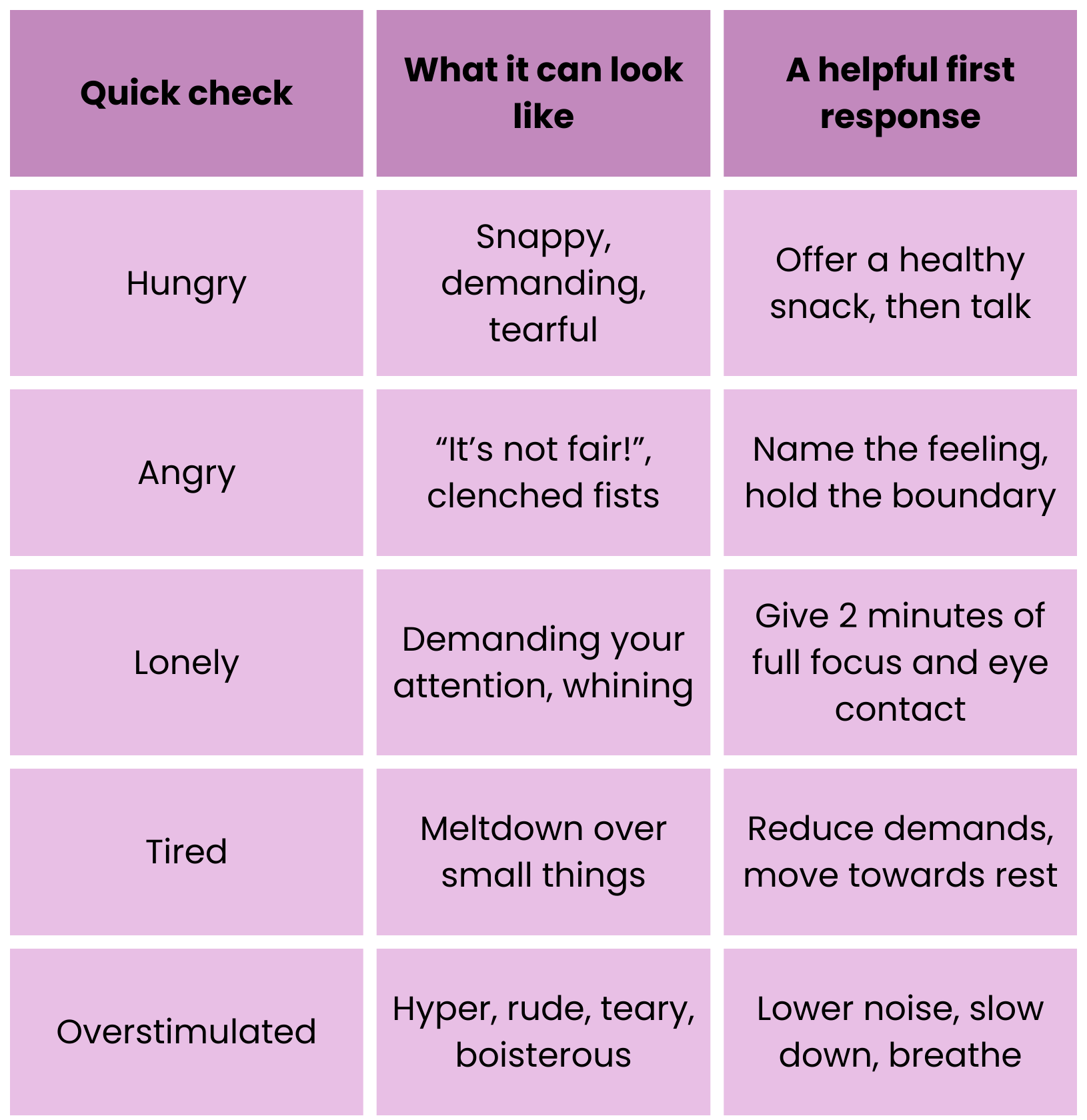
The takeaway is simple: meet the body's need first, then teach the heart.
Marketing also plays a part. Adverts are built to create urgency. Phones and streaming make waiting feel unusual.
So when your child struggles to wait, you're not just battling willpower, you're battling psychological training they didn't choose.
Behind the demand: comfort, control, attention, or fairness
A loud "I want it!" often carries a hidden message. When you translate the need, you can respond with more wisdom.
Here are a few translations you can hold in your mind:
"I want that toy" can mean, "I want to fit in like my friends."
"Give it to me now" can mean, "I feel small, I need control."
"It's not fair" can mean, "I'm scared I won't get my turn."
"I hate you" (said in a strop) can mean, "I'm overwhelmed, help me."
You can keep the boundary and still be kind. Kindness doesn't mean giving in. It means you don't punish your child for having feelings.
Teach contentment and restraint in the moment, with simple words you can actually say
You don't need a perfect lesson plan. You need a repeatable response. Short words, steady tone, and the same steps each time will do more than long speeches.
When you connect contentment to real life, your child learns that God cares about small moments. They also learn that disappointment isn't dangerous. It may be uncomfortable, but it is safe.
A quick three step script: name it, thank God, choose self-control
Use this simple rhythm in shops, at home, or in the car.
Name it (the want and the feeling).
Thank God (for what you have right now).
Choose (the next right thing: wait, save, share, or accept no).
Try saying something like this, adjusting for your child's age:
"I hear you. You really want sweets, and you feel cross. Let's thank God we have food at home. Today the answer is no, and with Jesus' help, you can handle that."
"You want that game, and waiting feels hard. Thank you, God, for the toys you already have. Let's put it on your wish list and we'll save."
"You're upset because your sister got one first. Thank you, God, for our family. Your job is to wait, and my job is to make it fair."
If your child knows any Scripture, keep it light and connected to the moment: "Paul learned to be content, so we're practising too."
That's enough. You're planting seeds and Holy Spirit does the watering to turn it into fruit.
Practise "wait" muscles at home: small habits that build big strength
Self-control grows through small repetitions. Think of it like building strength with light weights. You don't start with the heavy stuff or you'll just feel defeated.
Here are a few habits that work well in everyday family life:
Put a two-minute wait before snacks, especially after school.
Use a simple saving plan for pocket money, even if it's a small amount.
Keep one screen-time boundary that stays steady (for example, no screens before school).
Start a bedtime gratitude habit, one sentence each, no pressure.
Keep a "wish list" note on your phone instead of impulse buys.
Give away one toy each season, so your child practises "enough".
Say a short prayer after disappointment: "Jesus, help me be content."
Connect one habit back to Philippians 4:12 in child-friendly words: "We're learning in every situation, even when we have to wait."
Then praise effort more than outcomes. When your child takes one breath instead of shouting, notice it. When they accept "no" after a wobble, say well done.
Progress often looks like gradually shorter meltdowns, not sudden perfection.
When there is a tantrum, you can stay steady and still teach contentment
Even with good habits, tantrums will happen. A tantrum isn't a courtroom debate. It's a child in overload. So your first job is safety and calm, not explanation.
If you try to teach mid-meltdown, you'll usually get more noise. Instead, anchor the moment with steady presence.
Later, when your child's brain is back online, you can talk and pray.
Hold the boundary, keep the connection, and circle back to the lesson later
A simple order helps when you feel flooded:
First, keep everyone safe. Next, lower your voice. Then state the limit once, in plain words. After that, offer one calm choice. Finally, wait it out.
You might say, "I won't buy that. You can sit in the trolley or hold my hand." Then stop negotiating.
When the storm passes, circle back with a short chat. Keep it brief and warm.
You could try something like: "That was a hard moment. What did you want, and what did you feel?"
Then add Hebrews 13:5 in simple terms: "God stays with you when you're upset, and Mum stays with you too."
Finish with the idea of enough: "We have what we need, and we can be thankful."
If you want support for the hardest moments, keep 5 Biblical Responses to Tantrums close by. It gives you a simple plan for staying calm whilst holding the line.
Save it on your phone or stick it on the fridge, so you can use it when your brain goes blank.
To sum up
When your child wants it now, you're getting a chance to teach a better story:
Contentment is learned, Christ gives strength for hard moments (Philippians 4:11-13), "enough" is a gift (1 Timothy 6:6-8), and God won't leave you (Hebrews 13:5).
It's important training for real life, and waiting only gets longer as you get older.
Pick one script and one habit to start this week. Keep it simple, and repeat it often. Over time, your child will grow "wait" muscles, and you'll feel steadier too.
Pray this over your child: "Lord Jesus, teach my child to be content. Thank You for what we have. When they feel disappointed, stay close and give them strength. Help them choose self-control, and help me parent with calm love. Amen."