How to Stop Feeling Overwhelmed When You Read the Bible
You want to know God's Word. You really do.
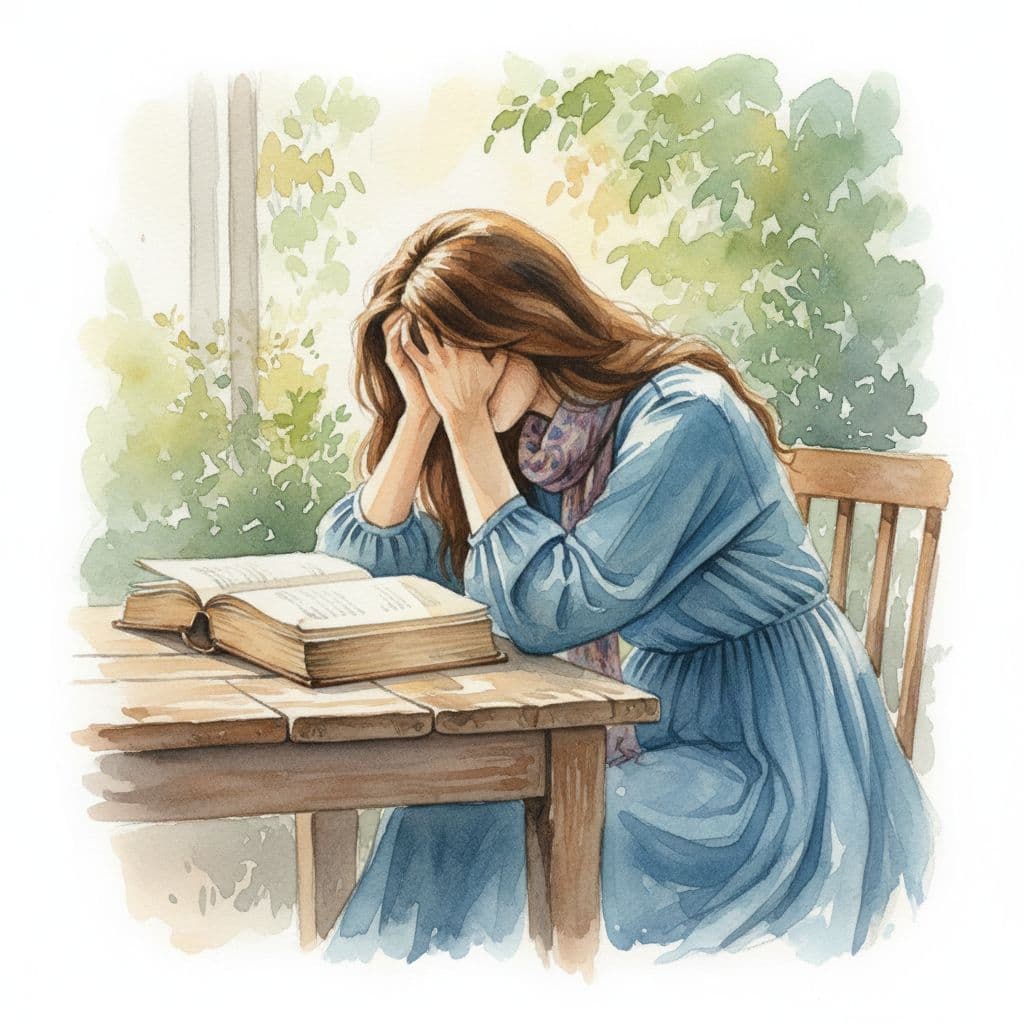
But sometimes opening your Bible can feel a little like standing at the bottom of a mountain, looking up and wondering, “Okay…where exactly am I supposed to start?”
There are 66 books. Some of them are familiar. Some sound like they belong in a Bible study escape room (now that's a good idea for my other business 🤣)
And some passages? Let’s just say they don't exactly explain themselves over your morning cup of tea.
Meanwhile, life is already full to the brim, and by the time you've finally decided on a passage to read, located a pen, and sat down, you've run out of time.
So if you've been wondering how to stop feeling overwhelmed when you read the Bible, here's some good news: you don't need a perfect quiet time, an elaborate study system, or three hours of uninterrupted silence.
You simply need a small, honest place to begin.
Choose one book. Read a short passage. Ask one simple question. Come back tomorrow.
That is enough for today.
Key Takeaways
Start with 10 to 15 minutes, one short passage, and one question.
Choose one Bible book and stay there long enough to understand the bigger picture.
Use a simple pattern: observe, understand, respond, and pray.
Build your Bible-reading rhythm around your actual life, not someone else's picture-perfect morning.
When a passage is confusing, slow down, look at the context, and ask for help.
How to Stop Feeling Overwhelmed When You Read the Bible
Let's take one thing off your plate right away: the goal isn't to read the whole Bible as quickly as possible.
And the goal isn't to understand every single detail the first time you sit down with a passage, either.
When you expect one Bible study session to accomplish all of that, it's easy to feel defeated before you've even opened the cover.
So make the task smaller.
Give yourself 10 or 15 minutes.
Read one paragraph or a short section.
Then ask one clear question:
“What is this showing me about God?”
That's it. You have officially begun. Congratulations!
Try This for Your Next Bible Study
Pray a short prayer asking God to help you understand His Word.
Read the passage twice, slowly.
Write down one thing you notice.
Write down one response or question.
Choose one small way you can respond today.
Notice what isn't on that list?
You don't need a colour-coded notebook.
You don't need seventeen highlighters.
You don't need a Pinterest-worthy Bible spread that looks like it belongs in a stationery shop.
A Bible, a pen, and a few quiet minutes are enough.
Consistency matters more than volume.
The point isn't to see how much Scripture you can get through. The point is to actually spend time in God's Word and allow it to shape you.
And speed-reading through to hit your daily quota doesn't allow time for it to sink in.
Choose One Bible Book Instead of Reading Randomly
Opening your Bible to a random verse can be encouraging sometimes. But if that's your main approach, you can miss the bigger story.
A verse makes more sense when you understand who wrote it, who first heard it, what was happening around it, and what comes before and after.
Think of it like walking into a conversation halfway through. You might catch an important sentence, but you could completely misunderstand what everyone is talking about.
Instead, choose one Bible book that fits where you are right now.
Read Mark if you want to focus on Jesus and His ministry.
Read Philippians if you're looking for encouragement and a reminder of joy in Christ.
Read James if you want practical teaching about living out your faith.
Read a few Psalms when you need words for praise, fear, grief, hope, or trust. Psalms are good for big emotions, as any parent to a young child (or teenager) will understand very well...
Then stay there for a few weeks.
You don't have to rush.
And please remember this: a Bible reading plan is a tool, not a spiritual report card.
If a plan helps you, wonderful. Use it.
If you find yourself frantically trying to “catch up” because you missed Tuesday, Wednesday, Thursday, and possibly half of Friday, it's okay to put the plan down.
You are not behind with God.
Use a Simple Method for Every Passage
One of the reasons Bible study can feel overwhelming is that we're not always sure what we're supposed to do once we've read the words.
So give yourself a simple pattern to follow.
1. Observe
What stands out?
Is there a repeated word or idea? Who is speaking? Who is being addressed? Is there a command, promise, warning, question, or contrast?
2. Understand
Now ask what the passage means.
What does it teach you about God, people, sin, faith, obedience, or the way God works?
And before you decide what a verse means, read the verses around it. Context matters.
3. Reflect
Now bring the truth closer to home.
Is there something to trust? Something to confess? Something to remember? Something to obey?
4. Respond
Talk to God about what you've read.
You don't need a polished, theological prayer. Just pray honestly.
Your notebook doesn't need to contain profound observations worthy of publication.
Write a few sentences.
Be honest.
That's enough.
Make Bible Reading Fit Your Real Life
Here's something that doesn't get talked about enough: your Bible study habit has to fit the life you're actually living.
Not the imaginary version of your life where you wake up before sunrise feeling refreshed, the children are somehow already dressed, the house is silent, your coffee is the perfect temperature, and nobody needs you for the next 90 minutes.
Lovely. Rare. Possibly fictional. Definitely Instagram worthy.
If your mornings involve children, commuting, caring responsibilities, work, getting yourself out the door, real life, or simply trying to locate the coffee you made five minutes ago, you don't have to copy somebody else's routine.
You might read before the house wakes up.
You might keep your Bible in your bag and read during lunch.
You might listen to an audio Bible while walking, commuting, folding laundry, or sitting in the car before the school run.
An evening study time might work better for you.
There isn't one perfect time of day when God is more willing to meet with you.
Choose a time and place you can return to most weeks.
Keep your Bible, notebook, and pen together if that makes starting easier.
But hold the routine loosely.
Your routine is there to help you meet with God, not to become another thing you have to perform perfectly.
Set a Small Goal You Can Repeat
Start smaller than you think you need to.
Seriously.
You could read one paragraph or one chapter on four days each week.
Four days gives you room for a full life. It also means that missing one morning doesn't suddenly make you feel as though you've ruined the entire week.
You can mark the days you read in a diary or calendar if that helps you notice your rhythm.
Just don't turn your little tick marks into a measure of your worth.
The goal is faithfulness, not gold stars.
Because busy weeks will happen.
Illness. Travel. Deadlines. Tiredness. Family needs. Unexpected appointments. The mysterious day when everyone needs something from you at exactly the same time, and you can't find a pen.
When that happens, don't wait for Monday to start again.
Open your Bible for five minutes today.
A small return is still a return.
Remove Distractions Without Chasing Perfect Conditions
Here are a few practical changes can make Bible reading easier:
Put your phone on silent or leave it in another room.
Set a short timer so you're not wondering how long you should study.
Sit somewhere comfortable. Make a hot drink.
If notifications are constantly pulling you away, try a paper Bible instead of an app.
But please don't make “perfect conditions” a requirement.
Your house doesn't have to be spotless.
The children may interrupt.
You may be tired.
Your brain may still be thinking about the email you forgot to send.
None of that disqualifies you from meeting with God.
Have a minimum version for difficult days.
Read three verses.
Write one sentence.
Pray one honest prayer.
That's it.
You are not failing because your Bible study was short.
A five-minute Bible reading on a hard day is not a lesser version of faithfulness. It is faithfulness in the life you have been given.
What to Do When a Bible Passage Confuses You
Confusion doesn't mean you're bad at Bible study.
The Bible contains history, poetry, prophecy, letters, wisdom, difficult events, cultural details, and imagery that can take time to understand.
Sometimes you will read something twice and still think, “I'm sorry…what?”
That's okay.
You are allowed to have questions. And even be shocked!
When a passage feels unclear, slow down.
Read the verses before and after it.
Look for repeated words.
Ask who is speaking and who is being addressed.
Compare a reliable Bible translation if a phrase seems difficult.
And write your question down.
You don't have to force an answer just because you're holding a notebook.
Writing down the question allows you to stay curious without pretending you understand something you don't.
It also gives you something specific to pray about and ask a trusted person later.
And be careful about building a major belief from one isolated verse.
The wider message of Scripture matters. So does patience.
Learn the Difference Between Context and Personal Application
This is an especially important habit when studying the Bible.
Before asking, “What does this mean for me?” ask:
“What did this mean in its original setting?”
Both questions matter. But they don't necessarily come in that order.
Different kinds of Biblical writing need to be understood differently.
Narrative tells events in the lives of people such as Abraham, Ruth, David, or the early church.
Poetry uses pictures, emotion, imagery, and vivid language.
Proverbs offers wise sayings rather than promises that every day will unfold in one fixed way.
Letters address real churches and real problems.
Prophecy often requires careful attention to its original audience and setting.
Not every command or promise was written directly to you in exactly the same way it was first given.
And yet every part of Scripture can teach you about God's character and His ways.
Context helps protect us from making a verse say what we want it to say.
That's not about making Bible study complicated.
It's about handling God's Word carefully because it matters.
Don't be afraid to ask for help. It's not a sign of a bad Christian. We all have questions, that's why we need each other.
My membership Rooted Together is a great place to ask those questions and be edified by other Christian women.

Build a Bible Study Habit That Lasts
A sustainable Bible study habit has room for ordinary weeks.
Instead of starting a brand-new plan every Monday morning and abandoning it somewhere around Wednesday afternoon, give yourself a simple rhythm you can actually repeat.
Try four reading days, one day to review or journal, and two flexible rest days.
Move the days around when life requires it.
The pattern matters more than the exact timetable.
And measure progress by more than chapter totals.
Notice your willingness to return to Scripture.
Notice what God is teaching you.
Notice where you're becoming more honest, more loving, more willing to forgive, more ready to obey.
Chapter numbers can tell you how much you've read.
They can't tell the whole story of how God is shaping you.
If you'd like some guided support, my free 5-day email course on how to study the Bible can help you take those first small steps.
Use a Weekly Rhythm Instead of Starting Over Every Monday
You might choose a passage on the first day.
On the next two days, read it again and write down what you notice.
Use another day to reflect and pray.
At the weekend, look back over your notes and write the main truth you want to remember.
Keep it simple:
Write one truth about God or His ways.
Write one prayer based on what you read.
Write one next step for your life this week.
The days can change.
Maybe your Bible reading happens on Tuesday, Thursday, Friday, and Sunday this week.
That's okay.
Your habit hasn't failed because it didn't fit neatly into a Monday-to-Friday box.
You're making space for God's Word in a real life.
Let Scripture Shape Your Life Beyond Your Notebook
Bible study becomes personal when it moves beyond the page.
A passage may lead you to worship God, seek forgiveness, offer comfort, make a wise choice, or show patience to someone who is—how shall we say this kindly?—testing your sanctification journey...
Choose one small action that connects to what you read.
If you studied forgiveness, perhaps you need to pray honestly about resentment.
If you read about generosity, perhaps you need to notice a practical need around you.
If you read a Psalm about trusting God, perhaps you need to hand Him one fear you've been carrying around like an overstuffed handbag.
Not every passage will produce a dramatic personal revelation.
Sometimes Scripture shapes you through steady, ordinary obedience.
Quiet obedience.
Repeated obedience.
The kind nobody else sees.
But God does.
Start With the Next Ten Minutes
You don't need to master the whole Bible before you begin reading it.
You don't need to know all the answers.
You don't need a perfect study system.
You don't even need a particularly impressive quiet-time setup.
Choose one book.
Read a short passage.
Ask a few simple questions.
Pray.
Ask for help when you need it.
Then come back again.
Life will interrupt your plans sometimes.
When it does, come back without shame.
God is not waiting for you to produce a flawless quiet time before you can open His Word.
So don't worry about figuring out the next six months.
Just think about the next ten minutes.
Schedule your next 10-minute Bible reading today.
And if you'd like a little more structure, my free 5-day email course on how to study the Bible is there to walk with you: one small, manageable step at a time.
You don't have to climb the whole mountain today.
Just take the next step.