
Practising Patience in Prayer: Teaching Your Child to Keep Asking God Without Giving Up
Table of Contents
Luke 18:1-8 in plain words: teaching your child what persistent prayer is (and is not)
Psalm 27 for waiting mums: how to model calm trust when answers take time
Rejoice, pray, give thanks: building a family habit of not giving up (1 Thessalonians 5:16-18)
As an Amazon Affiliate, I earn from qualifying purchases, at no extra cost to you. It just supports me and my family. Thank you!
You're tired, the day has been long, and your child is asking again about the same worry. Meanwhile, you've been praying for weeks, maybe months, and nothing seems to shift.
You know God hears you, yet the waiting still feels heavy. And you have nothing new to say to encourage your child.
This is where patience in prayer becomes more than a nice idea. It becomes something you live in front of your children, one ordinary day at a time.
Luke 18:1-8 helps you teach them to keep asking without giving up.
Psalm 27 shows you how to wait with courage when you're worn down.
1 Thessalonians 5:16-18 turns prayer into a steady family way of life, not a last resort.
How do you teach your child to keep asking God without giving up, while staying gentle and grounded yourself?
Luke 18:1-8 in plain words: teaching your child what persistent prayer is (and is not)
Jesus tells a story about a widow who keeps going to a judge for help. She's been treated unfairly, and she needs someone to put things right.
The judge doesn't care about what's right. He doesn't care about people. At first, he ignores her.
Still, she keeps coming back.
In the end, the judge gives her justice, not because he's kind, but because he's fed up of hearing her.
Then Jesus makes the point clear: he told this story so you would pray and not give up.
That purpose matters when you're raising children. Your child will face problems they can't fix.
Friendships get messy. School feels scary. A sibling says something cruel. Money feels tight at home, and they pick up on the stress.
In those moments, you're teaching them what they can do with their need.
Persistent prayer, in this story, isn't about having the right phrases. It isn't about squeezing an answer out of God through effort.
Instead, it's about returning to Him because you trust that your Heavenly Father cares for you.
Think of it like posting a letter and then checking the doormat every day.
You're not doubting the postal service by checking. You're showing you believe something is coming, even if you don't know which day.
Prayer is your child practising hope with God, and exercising their faith that God does hear and that He will answer.
Here's a simple example: Your child might say, "Mum, no one plays with me at break." You've prayed for them to have a friend group, and it hasn't happened yet.
You can still help them ask again tonight. You can also help them act wisely tomorrow. Persistence holds both, asking and trusting, while life keeps moving.
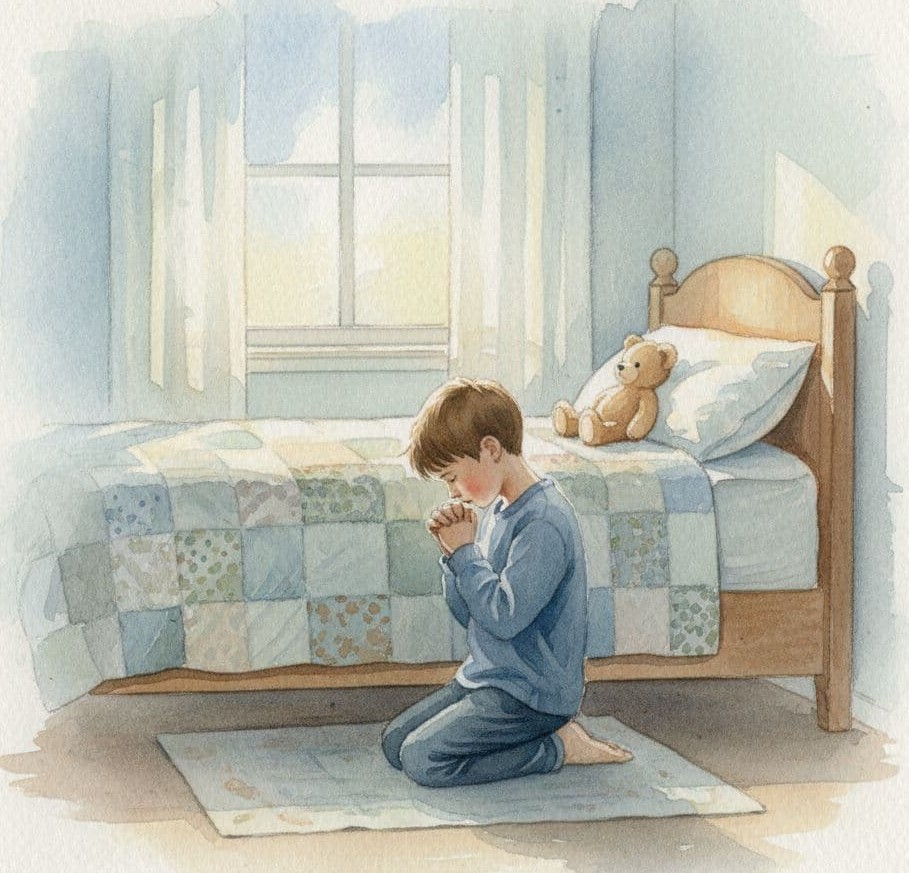
What the persistent widow shows you about courage, not perfect words
The widow keeps coming because she believes someone must listen.
She doesn't have power, money, or connections. All she has is her voice, and the courage to use it again.
That's good news for children. They don't need long prayers. They don't need fancy Bible language or to say the right words.
What they need is bravery to come back to God with the same request, even after a hard day.
You can give them child-friendly prayers that fit in one breath:
"Jesus, please help me be brave at school today."
"God, please help us be kind to each other at home."
"Father, please give me a good friend, and help me be a good friend too."
Those short prayers train their heart. They also teach your child that honesty is welcome.
Some nights, their best prayer will sound like, "I'm upset, God. Please help." That still counts.
It may even be the start of real trust and the beginning of their own personal relationship with God.
A quick warning: persistence is not pressure, and God is not the unjust judge
This story can be misunderstood, especially by sensitive kids. They may think, "If I ask enough times, God has to do it."
Then, when the answer doesn't come quickly, they assume they failed.
So be clear: God isn't like the judge. The judge helps because he's reluctant. God helps because he's good. God doesn't need persuading to care.
Also, "wait" or "no" doesn't mean your child didn't pray hard enough.
Sometimes God protects. Sometimes He grows patience first. Sometimes He's working in ways you can't see yet.
And sometimes He's bringing along something even better, but we have to be patient and trust Him while we wait for it.
When your child says, "God didn't answer," try this: name the feeling, then point back to God's heart.
For example, "That's really disappointing. I'd feel sad too. Let's tell God we're sad, and ask Him to help us trust Him while we wait."
Psalm 27 for waiting mums: how to model calm trust when answers take time
Psalm 27 speaks to the part of you that feels shaky while you wait.
It doesn't pretend waiting is easy. It talks about fear, enemies, and the pressure of not knowing what comes next.
Still, it keeps circling back to one steady truth: God is your light and your salvation.
When you're teaching children to practise patience in prayer, your tone matters. Your child learns from your words, yes, but they also learn from your actions.
They notice when you panic. They notice when you breathe. They notice whether you pull them into fear, or lead them back to God.
Psalm 27 shows you a mum's kind of courage. Not loud bravery, but steady steps.
It says, "The Lord is my light," and that changes what darkness means. It says, "I will seek your face," which is different from seeking quick fixes.
It also says, "Wait for the Lord, be strong," which is a command and a comfort at the same time.

Waiting often looks ordinary. It looks like packing lunches while your mind spins. It looks like smiling at the school gate while you carry a private ache.
Yet Psalm 27 invites you to do one thing on repeat: look towards God's face. In other words, you keep turning your attention back to Him, even when you can't change the timeline.
Try a simple declaration you can say with your child, out loud, when worries rise:
"I'm not alone. The Lord is my light. I will wait, and God will help me be strong."
Turn waiting into a small daily rhythm your children can see
Children don't just need a talk about waiting. They need a pattern they can copy. Keep it short enough to do on the school run, at bedtime, or mid-argument over a toy.
Here's a rhythm you can practise in under two minutes:
First, stop and lower your voice.
Next, breathe slowly (one breath in, one breath out).
Then, pray one line of Scripture, such as "The Lord is my light," and follow it with one honest request.
After that, you act with love, even if you still feel wobbly.
Use it when a trigger hits.
For example, if bedtime worries start spiralling, sit on the edge of the bed, breathe together, pray one verse, and then choose the next kind step (a cuddle, a glass of water, a plan for tomorrow).
What to do when your child asks, "Why isn't God answering?"
It helps to have a few calm responses ready. You don't need a big speech. You need truth that feels safe.
Here are four simple anchors you can use:
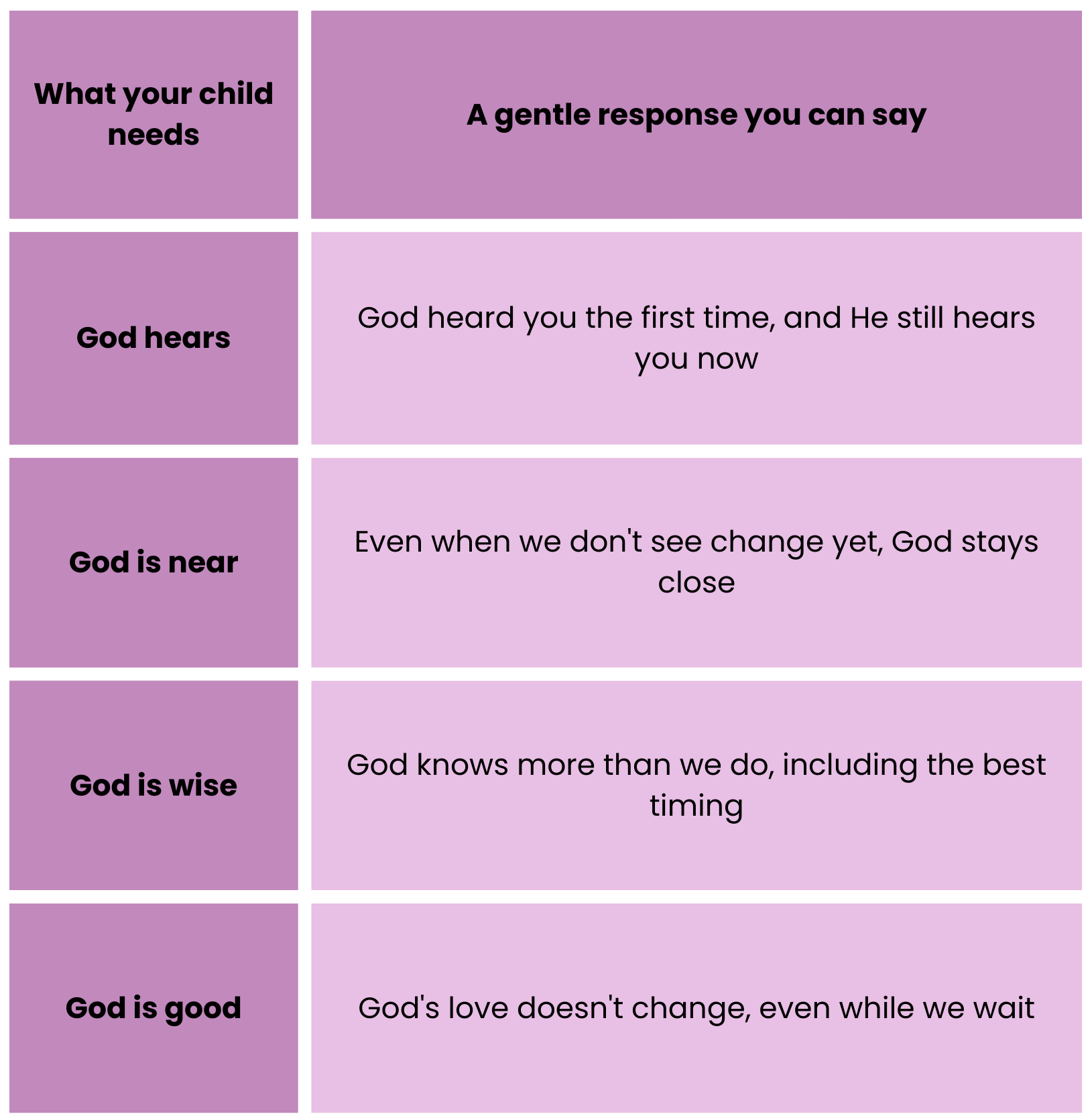
One practical idea makes waiting less foggy: keep a "waiting list" page in a notebook.
Write the request, then add dates when you prayed.
Later, you can also write any small changes you notice. Your child learns that waiting is normal, and faith can stay steady across time.
Also, read Daniel 10 which tells of Daniel praying and fasting for 21 days before receiving a response.
Though your experience may not be the same as his, it can be encouraging to see that people in the Bible experienced waiting for a response from God as well.
It's normal and it's not because of something we did or didn't do!
Rejoice, pray, give thanks: building a family habit of not giving up (1 Thessalonians 5:16-18)
"Rejoice always, pray continually, give thanks in all circumstances."
Those words can feel impossible when you're cleaning up cereal, breaking up bickering, and carrying your own unanswered prayers.
Yet "pray continually" doesn't mean you speak non-stop. It means you stay connected.
It's like walking with someone in the same room. You're not always talking, but you're aware they're there, and that you can carry on the conversation at any time.
That kind of prayer is realistic for mums. It fits in the gaps. It shows your children that prayer isn't only for Sunday, or only for emergencies.
It's how you live with God through ordinary hours.
Joy and thanks also help you last.
Joy isn't pretending everything is fine. It's choosing to notice God's care, even on a hard day.
Gratitude does the same. It turns your child's eyes from "what I don't have yet" to "what God is doing right now".
You can build this into family life with simple ideas that suit different ages:
For toddlers, use a one-line repeat prayer: "Thank you, Jesus, for today."
For primary school age, each say one thing to thank God for at dinner time.
For older children, keep a "please" and "praise" list on the fridge.
Before school, pray for one friend by name.
After school, thank God for one good moment, even if the day was rough.
For pre-teens, invite them to write a private prayer note in a journal.
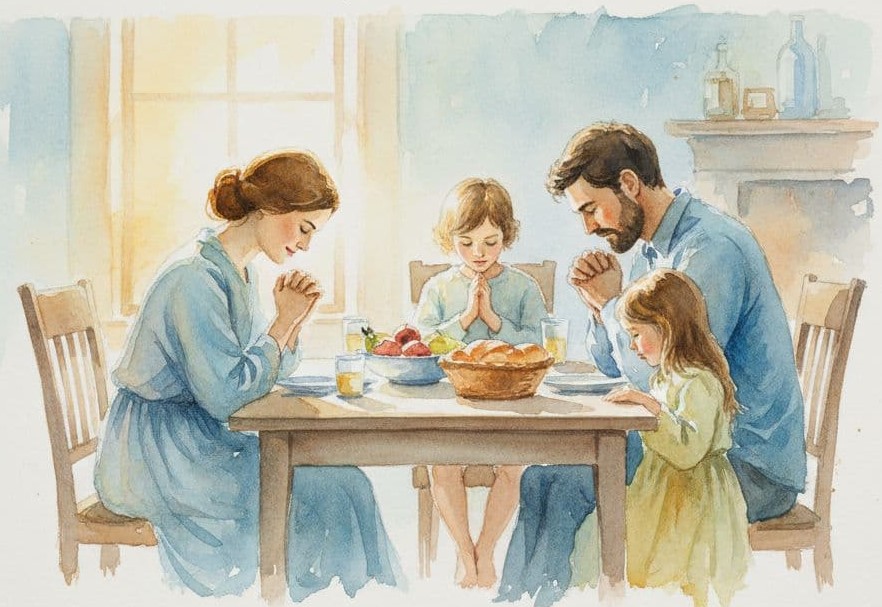
None of these are perfect. That's the point. You're building a realistic habit, not performing a religious moment.
God wants authenticity, not following the motions to look perfect.
Make it simple: 3 tiny prayer practices that fit a busy day
Consistency matters more than length, so keep it small and repeatable.
Breath prayers: On the inhale, "Jesus, help me." On the exhale, "I trust You."
Mealtime gratitude: "Thank you, God, for this food, and for being with us today."
Bedtime keep-asking prayer: "Father, we're still asking for ___, please help us wait with brave hearts."
If you miss a day, don't bin the whole idea. Just start again the next meal, the next bedtime, the next car journey.
Keep asking without whining: helping children handle big feelings while they wait
Children often "nag" because the feeling is big. Under the repeated question is fear, sadness, jealousy, or plain frustration.
If you only correct the tone, you may miss the need.
Try this simple plan when waiting leads to tears or tantrums: name the feeling, pray about it, then choose the next right action.
For example: "You feel worried about tomorrow. Let's ask God for help. Now, let's pack your bag together."
That approach keeps prayer connected to real life, not stuck in the air. It also shows your child that persistence can be calm, not demanding.
If tantrums are a regular part of the waiting season in your home, grab this free 5 Biblical Responses to Tantrums to help you respond with steadiness, without shaming your child or ignoring the moment.
Also, for further reading, I recommend God on Mute by Pete Greig. It's a great book on what to do when your prayer goes unanswered.
To sum up
Luke 18:1-8 teaches you to keep praying and not give up, because returning to God is an act of trust.
Psalm 27 teaches you to wait with courage, because God stays your light when you can't see ahead.
1 Thessalonians 5:16-18 teaches you to pray through the day, because ongoing connection keeps your heart steady.
Pick one family practice to start this week. A simple option is a 7-day "keep asking" list, with one request you pray for daily, and one thank you that you say out loud.
A short prayer for your waiting season:
Lord, give us steady hearts when answers take time.
Teach my child to ask with courage and honesty.
Help us rejoice and give thanks while we wait.
Make our home a place of quiet trust. Amen.