Patient Words for Mums in Cars, Shops and Queues
Patient Words for Mums in Cars, Shops and Queues
Why patient words matter when your day feels rushed
Keep two short Bible memory lines ready before you leave home
Practise patient words in the car, where feelings can rise fast
Speak with patience when the shop trip gets stressful
Stay kind and steady when you are stuck in queues
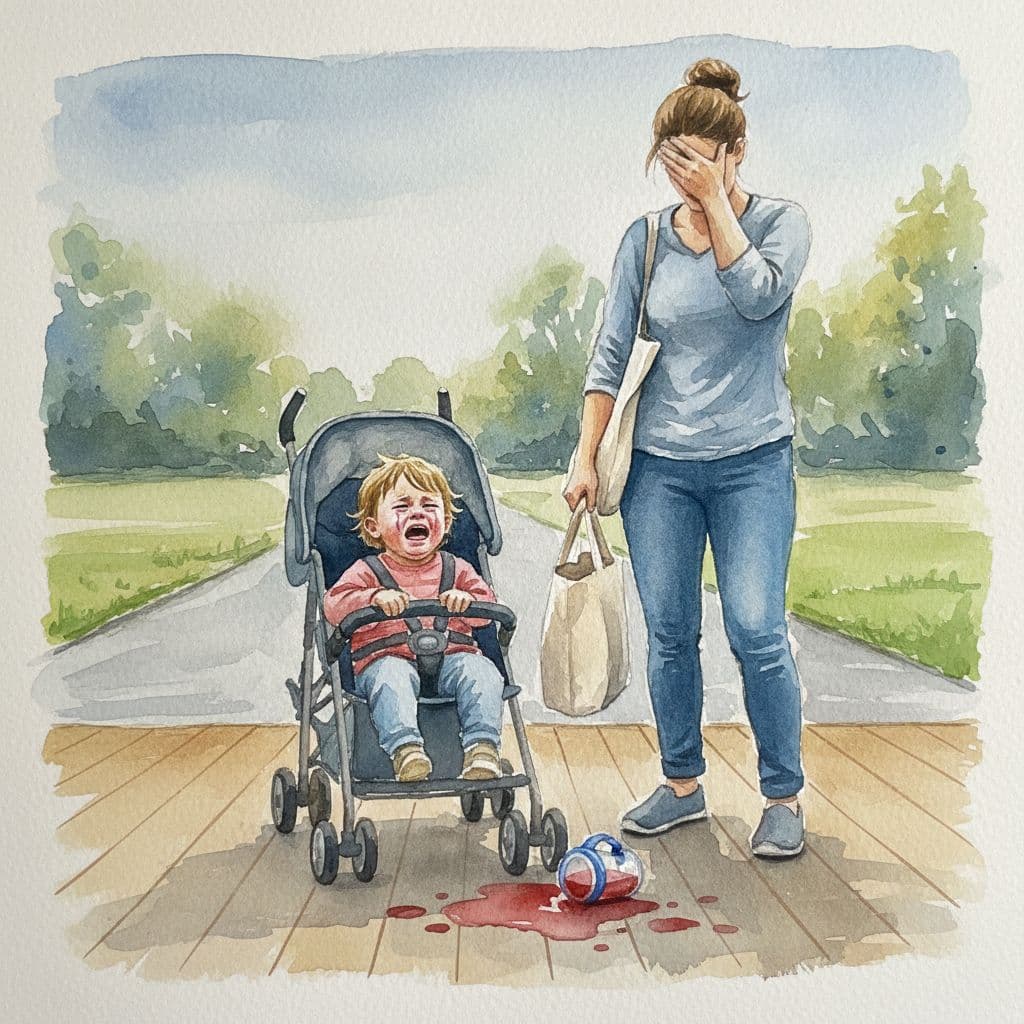
You know the moments. You're already late, someone has dropped a snack on the floor and is trying to pick it up to eat, somebody else is asking the same question again, and your patience feels paper-thin.
Training patient words rarely happens in a quiet room. It happens in the car, at the shop, and in queues, when noise, delay, and little voices all press on you at once.
That's where short Bible memory lines can help. 1 Corinthians 13:4-7 and Proverbs 16:32 give you simple truths to carry when you feel rushed, not so you'll be perfect, but so you'll keep growing in grace.
And if tantrums are part of the picture too, this free resource 5 Biblical Responses to Tantrums is a helpful next step.
Why patient words matter when your day feels rushed
The hardest words to control are often the ordinary ones.
Not the big family talk around the table, but the snapped reply in traffic, the sharp warning by the trolley, the frustrated sigh in a slow-moving queue.
When you're tired, touched out, or embarrassed in public, your mouth often reacts before your brain can jump in with the consequence.
That's why these small moments matter. They show you where you need God's help most.
Patient words are not weak words. They are loving leadership. They don't ignore poor behaviour, and they don't mean you never correct your child.
They mean you correct with steadiness, not heat. In a way that is consistent and expected, not out of the blue and leaves your child feeling hurt and confused.
What usually triggers impatience in the car, shop, and queue
Most impatience has a pattern. You're running late. The children are hungry. Two siblings start bickering in the back seat. Someone asks for sweets after you've already said no seven times. Then you feel eyes on you, and suddenly your tone gets sharp.
The setting changes, but the pressure points don't. Noise, repetition, waiting, and public stress all pull at you in the same direction. You want the problem over, fast.
Once you spot the pattern, you can catch it sooner. You can notice, "I'm feeling rushed," before it turns into, "Why are you all doing this to me?" That small bit of awareness gives you room to choose a better sentence.
How your words shape the tone of the whole moment
A calm sentence can lower the temperature of the whole situation, just like a sharp one can raise it in seconds.
Children often borrow your tone before they listen to your instruction.
That isn't a guilt trip. It's hope. Your words carry weight, and that means they can guide a moment back towards peace.
If you say, "We're going to sort this calmly," you're not pretending everything is fine. You're setting the tone.
You're showing your child what strength sounds like when it isn't shouting. And that helps teach them that authority and power doesn't belong to who shouts the loudest.
Keep two short Bible memory lines ready before you leave home
When you're on the edge of snapping, you don't need a long study note in your head.
You need a short line you can grab quickly, so it becomes the go-to reaction instead of frustration.
That's why simple memory lines work so well. They help you remember truth before your feelings take over.
"Love is patient and kind."
"Better patient than powerful."
Use 1 Corinthians 13:4-7 to remember what love sounds like
1 Corinthians 13 is often read at weddings, but it belongs in family life too. Love is patient. Love is kind. It isn't rude, self-seeking, or easily angered.
That makes it a strong inner check before you answer your child. Not, "Am I annoyed?" You probably are, and that's understandable. The better question is, "Will my next sentence sound like love?"
Sometimes that means changing one line. Instead of, "How many times do I have to tell you?" you say, "I'm going to tell you again, and I need you to listen." Same correction, different underlying message: love not annoyance.
Use Proverbs 16:32 to remember that self-control is stronger than speed
Proverbs 16:32 cuts against desire to rush. It reminds you that self-control is strength. Not speed. Not getting the last word. Not winning the moment by force.
And if we can learn this and live it out so our children see it and learn it too, then it would save so many arguments!
You can silence a child with harshness, but that isn't the same as leading them well.
Quick control often feels powerful, yet patient self-control is stronger because it keeps peace intact.
When frustration rises, this short line helps: better patient than powerful. It reminds you that the goal isn't to overpower the moment. The goal is to respond in a way that honours God and helps your child.
Practise patient words in the car, where feelings can rise fast
The car can feel like a pressure cooker. Children get bored, tired, or noisy. You can't walk away. Traffic slows you down. Time matters. Everybody feels trapped.

Turn the drive into a gentle reset, not a shouting match
Before the drive starts, set the tone early. A simple reminder is often enough: "We're speaking kindly in the car today," or "If something goes wrong, we'll use calm voices."
That short pre-set matters. It tells your children what kind of atmosphere you're building. It also reminds you. You are not entering a battle. You're leading a journey.
When mistakes happen, keep your words plain and soft. "That was unkind, try again." "I can hear you're upset." "We'll talk when I can stop safely." Soft doesn't mean vague. It means controlled.
When children feel like you're not in control of the situation, their stress levels go up and they often shout or have a meltdown, because they feel unsafe.
Keep in control of the situation and they'll feel happier and more secure. And calm but firm discipline helps too, where needed.
Use one-line replies when you feel yourself getting wound up
You don't need perfect phrasing in traffic. You need short replies that buy you a breath.
You might say, "I hear you, and I'm thinking." Or, "That noise needs to come down." Or, "We're not solving this by shouting." These lines are easy to remember and hard to mishear.
If the whining keeps going, name the feeling without giving the chaos the steering wheel. "You're disappointed." "You're tired." "You don't like waiting." Then hold the line.
Often the calmest sentence in the car is the one that keeps you from saying something you regret, then having to calm everyone down and struggle your way back to peace.
Speak with patience when the shopping trip gets stressful
A quick shopping trip can unravel fast. You're watching the time, watching the budget, and watching a child who has suddenly noticed every biscuit in the aisle.
This is where patient words help you stay firm without becoming harsh. You don't need to give in to every request, and you don't need to shame your child to keep control.
Set expectations before you go in so you do less correcting later
A one-minute chat before you go into the shop can save ten minutes of correcting inside it. Keep it simple and age-appropriate.
You might say, "We're getting a few things and going home. No sweets today. Stay close to me. Ask once if you need something." That's clear. Children handle boundaries better when they hear them before temptation arrives.
It also helps you feel steadier. You already know what you're going to say. You're less likely to react out of irritation because you've made the plan clear.
Choose words that guide without shaming your child in public
Public correction can turn sour fast because embarrassment creeps in. You feel watched, so you speak harder than you meant to. Your child feels exposed, so they dig in.
Try lower, not louder. Move close. Use their name. Give a short instruction. "Come back beside me." "Hands off, please." "You may be upset, but you may not grab."
Avoid lines that attack the child instead of the behaviour. "You're being embarrassing" rarely helps. "I won't let you speak like that" is firmer yet kinder. It keeps dignity in the moment whilst still holding the line.
Stay kind and steady when you are stuck in queues
Queues test patience because nothing is moving and you can't control it to make it go quicker. The till is slow. The chemist line is long. School pick-up crawls. A child starts asking, "How much longer?" every twenty seconds.
Those are small moments, but they reveal plenty. Waiting doesn't create your heart, it shows it.

Use waiting time to practise calm speech before you need it
A queue can become a tiny training ground. Whilst you wait, breathe slowly. Pray one line. Repeat your memory phrases. "Love is patient and kind." "Better patient than powerful."
That changes your inner script before your mouth starts running ahead. You stop feeding the feeling of pressure. You start feeding truth instead.
If your child is restless, speak in the same tone. "Waiting is hard, but we can do hard things kindly." That sentence teaches more than a lecture ever will.
Model patience when your children copy your reaction
Your children learn how to wait by watching you wait. They notice your sighs, your face, your muttering, your tone with the cashier, all of it.
If you huff, complain, and snap, they learn that delay is an excuse for roughness. If you stay measured, they learn that frustration doesn't have to rule the room.
This doesn't mean you paste on a fake smile. It means you show them what honest, restrained patience looks like. "I don't like waiting either, but we'll be kind whilst we do it." That's a lesson they can carry for years.
Build a simple habit so patient words become more natural
Patient speech doesn't usually appear by accident. It grows through practice. Bit by bit, trip by trip, sentence by sentence.
The good news is that small habits count. You don't need a complicated system. You need a repeatable one.
Use a quick before-you-leave prayer and memory check
Before you leave for the school run, the food shop, or a long errand, pause for thirty seconds. Ask God for a calm heart. Bring your two memory lines to mind. Pray for grace for you and your children.
It can be as simple as this: "Lord, help me speak with patience and self-control today." Then hold the lines in your mind like tools in your pocket.
That tiny pause can change the whole feel of the outing. Not because everything goes smoothly, but because you go in prepared.
Recover well when you slip and speak too sharply
You will get this wrong sometimes. You will speak too fast, too hard, too sharply. That doesn't cancel your progress.
Apologise quickly. Keep it plain. "Mummy spoke harshly. That was wrong. Will you forgive me?" Then begin again. Children don't need a perfect mother. They need a humble one who knows how to return to grace.
If tantrums are one of the places you feel stretched most, 5 Biblical Responses to Tantrums can help you think through those louder, harder moments with the same steady heart.
To sum up
Growth in patient words usually happens in the unnoticed parts of the day. In traffic. By the till. Halfway down the cereal aisle. One steady sentence at a time.
1 Corinthians 13:4-7 and Proverbs 16:32 give you short memory lines you can carry into those ordinary tests. "Love is patient and kind." "Better patient than powerful." Keep going, trust God with the slow work, and if you want extra help for the tougher moments, download 5 Biblical Responses to Tantrums.