
Jesus in the Wilderness: Helping Children Resist Temptation with God's Word
Table of Contents
What happened when Jesus was tempted in the wilderness
How Deuteronomy 8 and Psalm 119 show children where real strength comes from
How you can teach your child to answer temptation with God's Word
Simple ways to build a home where Scripture is part of everyday life
Your child faces temptation every day. It may look small, like grabbing a toy, shouting in anger, or hiding the truth. Yet those little moments matter, because they shape the heart.
That's why the story of Jesus in the wilderness is so helpful for family discipleship.
In Matthew 4:1-11, Jesus shows you what it looks like to face real temptation and answer with God's Word.
Deuteronomy 8 and Psalm 119:9-11 help you see why that matters so much in your home.
If you want to train your children with gentleness and truth, this story gives you a strong foundation to build on.
What happened when Jesus was tempted in the wilderness
Matthew 4:1-11 tells you that Jesus was led by the Spirit into the wilderness. He fasted for forty days and forty nights. After that, He was hungry.
This was not a pretend test. Jesus was weak in body, alone in the desert, and facing the devil's lies head-on whilst He was physically vulnerable.
That matters for your children, and for you. Jesus knows what temptation feels like.
He understands pressure, hunger, weakness, and the pull to take the wrong path. Yet He never sinned.
The devil came to Jesus three times. Each time, he tried to draw Jesus away from trusting and obeying His Father.
Each time, Jesus answered with the truth of Scripture. He did not panic. He did not bargain. He did not give in.

For children, this story is easy to grasp at its core. Jesus was tempted, but He obeyed God.
He shows them that sin is not harmless, and that God's Word is not weak. It is a sword in the middle of a fight
The three temptations, in child-friendly words
First, the devil told Jesus to turn stones into bread. Jesus was hungry, so the temptation sounded sensible.
Yet the issue was deeper. Satan wanted Jesus to meet a real need in the wrong way, apart from His Father's will.
Next, the devil urged Jesus to jump from the temple and force God to rescue Him. That was a temptation to demand proof, instead of trusting God quietly.
It was like saying, "If God loves me, He must show it my way."
Finally, the devil offered Jesus power and glory if He would worship him. This was the clearest lie of all.
It promised a crown without obedience, and success without worshipping God.
Children understand this more than you may think. They know the pull to get what they want now, test limits, and choose what feels or looks good instead of what is right.
Why Jesus answered with Scripture every time
Jesus could have answered in many ways. Yet He chose God's Word every time. He said, "It is written." That tells you something beautiful. Truth was already in His heart.
His answers came from Deuteronomy. So, even in a hard moment, the right words were ready. He did not rely on His own ideas. He stood on what God had said.
When temptation speaks fast, Scripture helps your child slow down and hear what is true.
That's a helpful pattern for your home. Your child won't remember long talks in the middle of big emotions.
But a short Bible phrase, learned ahead of time, can come back in the moment.
Little by little, God's Word gives them language for obedience and helps create a habit.
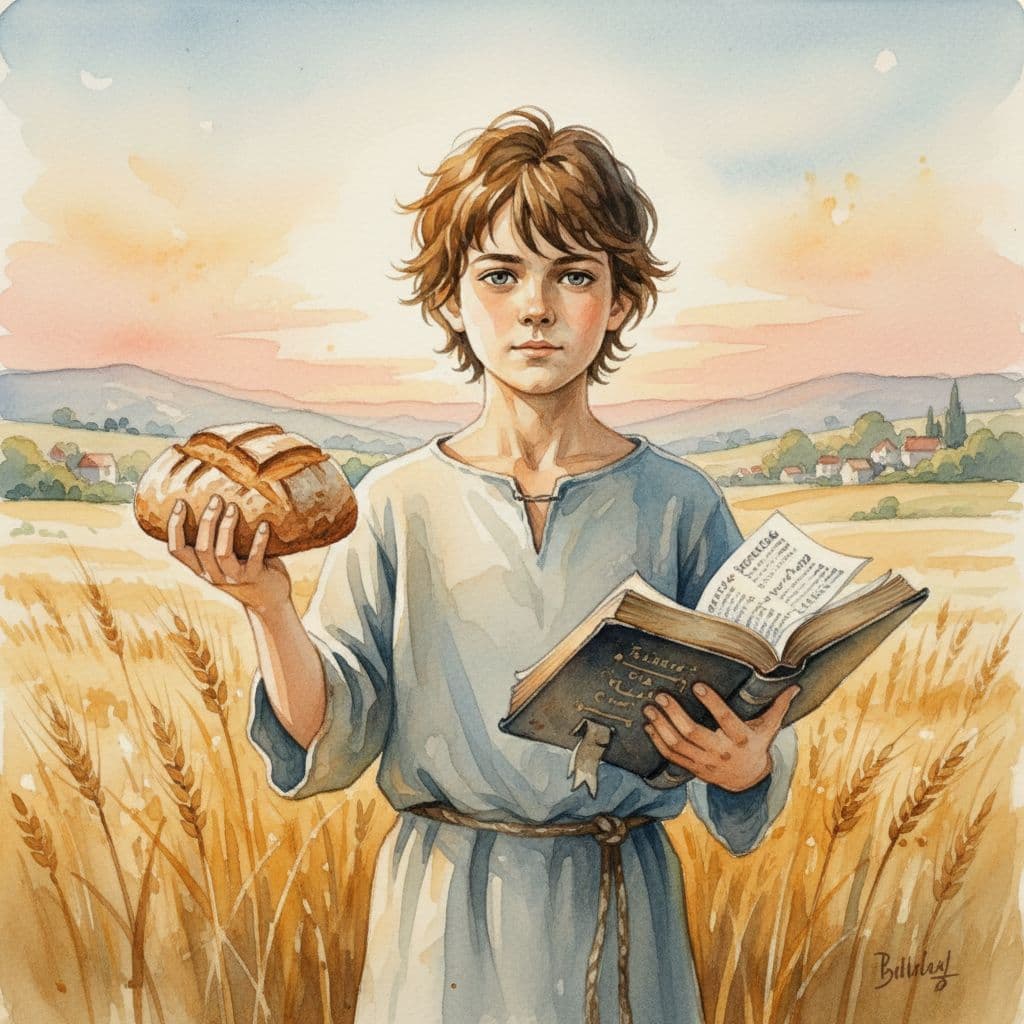
How Deuteronomy 8 and Psalm 119 show children where real strength comes from
The wilderness story does not stand on its own.
Jesus quotes from Deuteronomy because that book already speaks about testing, hunger, and learning to trust God.
Psalm 119 then shows what that trust looks like in daily life.
Together, these passages teach you that resisting temptation is not mainly about strong willpower.
It is about depending on God. It is about feeding on His truth and storing it in the heart.
'Man shall not live on bread alone' means your child needs more than comfort
In Deuteronomy 8, God reminded Israel that He let them hunger and then fed them with manna.
Why? So they would learn that life does not come from bread alone, but from every word that comes from God.
Your child needs food, sleep, hugs, and care. Those things matter. Still, they need more than comfort.
They need truth. They need to learn that not getting what they want right away is not the end of the world.
When your child is upset because they can't have a biscuit, a toy, or the first turn, the moment often feels bigger than it is.
Yet that small struggle can become a training ground.
You can gently teach, "You want something badly, but God will help you obey even when you feel disappointed."
So, Deuteronomy 8 helps you see that lack is not always harm. Sometimes God uses want, waiting, and weakness to teach trust.
And though the emotions don't feel good, we can learn to work through them and lean more on God when we're weak.
'I have hidden your word in my heart' gives a simple plan for daily discipleship
Psalm 119:9-11 asks how a young person can stay pure. The answer is simple and steady, by living according to God's Word.
Then the psalm says, "I have hidden your word in my heart that I might not sin against you."
That is a picture we can all use. God's Word hidden in the heart is like food packed for a long journey. When the hard moment comes, there is something there to draw from.
You do not need a complicated plan. Short verses work well. Repetition works well too.
You can say a verse at breakfast, repeat it in the car, pray it at bedtime, and come back to it after conflict. Those ordinary moments often do more than one long lesson.

How you can teach your child to answer temptation with God's Word
You are not trying to raise a child who can quote verses to look impressive. You are helping them learn where to run when sin calls.
That takes time, and it often grows slowly.
The good news is that you do not need to do everything at once. Small, faithful steps build strong roots.
Start with the temptations your child actually faces
Begin with real life, not abstract ideas. If your child hits a sibling, lies to avoid trouble, whines for what they want, or refuses to wait, those are the places to start.
Pick one struggle and pair it with one clear truth.
If lying is the issue, teach that God loves truth.
If grabbing is the habit, teach that love is kind.
If waiting is hard, teach that God helps us be patient.
Keep it simple. A child who faces one clear truth again and again is more likely to remember it.
If you load too much on at once, the lesson can slip away.
This helps you stay calm as well. Instead of giving a long lecture, you can return to one faithful sentence and train with purpose.
We've all been there, trying to give a TED Talk whilst your child is screaming and crying, then getting cross that they're not listening.
But the more you practice, the easier it gets to say a quick, helpful sentence then stop.
Use short Bible phrases your child can remember in the moment
Children need words they can carry into the fight. Long explanations have their place, but short Bible phrases often work better when emotions are high.
You might use phrases about telling the truth, being kind, obeying straight away, or trusting God when upset.
Say them often when your child is calm. Repeat them during play, on the school run, or before going into a tricky setting.
Role play helps too. You can say, "What could you say if you want your brother's toy?" Then let your child practise the truth before the real test comes.
Like learning road safety before crossing a busy street, children need training before the pressure hits.
The goal is not perfect reciting. The goal is helping your child recognise a lie and answer it with truth.
Correct with grace, then point back to Jesus
Your child will still give in to temptation. So will you. That does not mean the training has failed.
When sin happens, correct it clearly. Call lying a lie. Call disobedience disobedience.
Yet do not stop there. Point your child back to Jesus, who obeyed perfectly in the wilderness and in every other place too.
That keeps discipline from becoming cold or crushing. Your child needs truth, but they also need hope.
They need to confess sin, receive forgiveness, and learn a better path next time.
So, after correction, come back to the Bible phrase again. Pray together. Retrain the moment.
This is how grace and growth work side by side in a Christian home, without condemnation (Romans 8:1).

Simple ways to build a home where Scripture is part of everyday life
A home shaped by Scripture does not have to look polished. It only needs to make room for God's Word in normal life.
The aim is not more pressure. It is steady exposure.
Make Bible memory part of ordinary routines, not an extra burden
Choose one verse for the week. Put it on the fridge. Say it at breakfast. Repeat it in the car. Pray it at bedtime. Then bring it back after discipline if it fits the moment.
That rhythm is simple enough to keep going, even in a busy season. Consistency matters more than doing a lot. A few words repeated often can sink deep over time.
Children learn in layers. So, don't worry if progress feels slow. You are building a path, one step at a time.
Use helpful resources that support, not replace, your teaching
Sometimes you need help putting truth into words, especially in loud, emotional moments. That is where a simple tool can serve you well.
If tantrums are a frequent struggle in your home, grab my free 5 Biblical responses to tantrums to give you clear support.
It can help you apply Scripture in the heat of the moment while keeping your tone calm and your aim steady.
Teaching your child to resist temptation will take time. Yet Jesus has already shown the way. He faced the tempter, answered with Scripture, and obeyed where we fail.
So keep bringing God's Word into the small moments of family life. As you do, your child will slowly learn to spot lies, choose obedience, and run back to Christ when they fall.
Keep going with hope. The same Saviour who met temptation in the wilderness is still helping your family today.
If you're finding it hard, ask Him for help. He is always near, He never leaves you, and He cares so much for you and your family.